Taxes included.
Free shipping within Japan, except for works with separate shipping charges stated on the product page.Domestic shipping is cash on delivery; please pay the carrier upon delivery.Shipping details
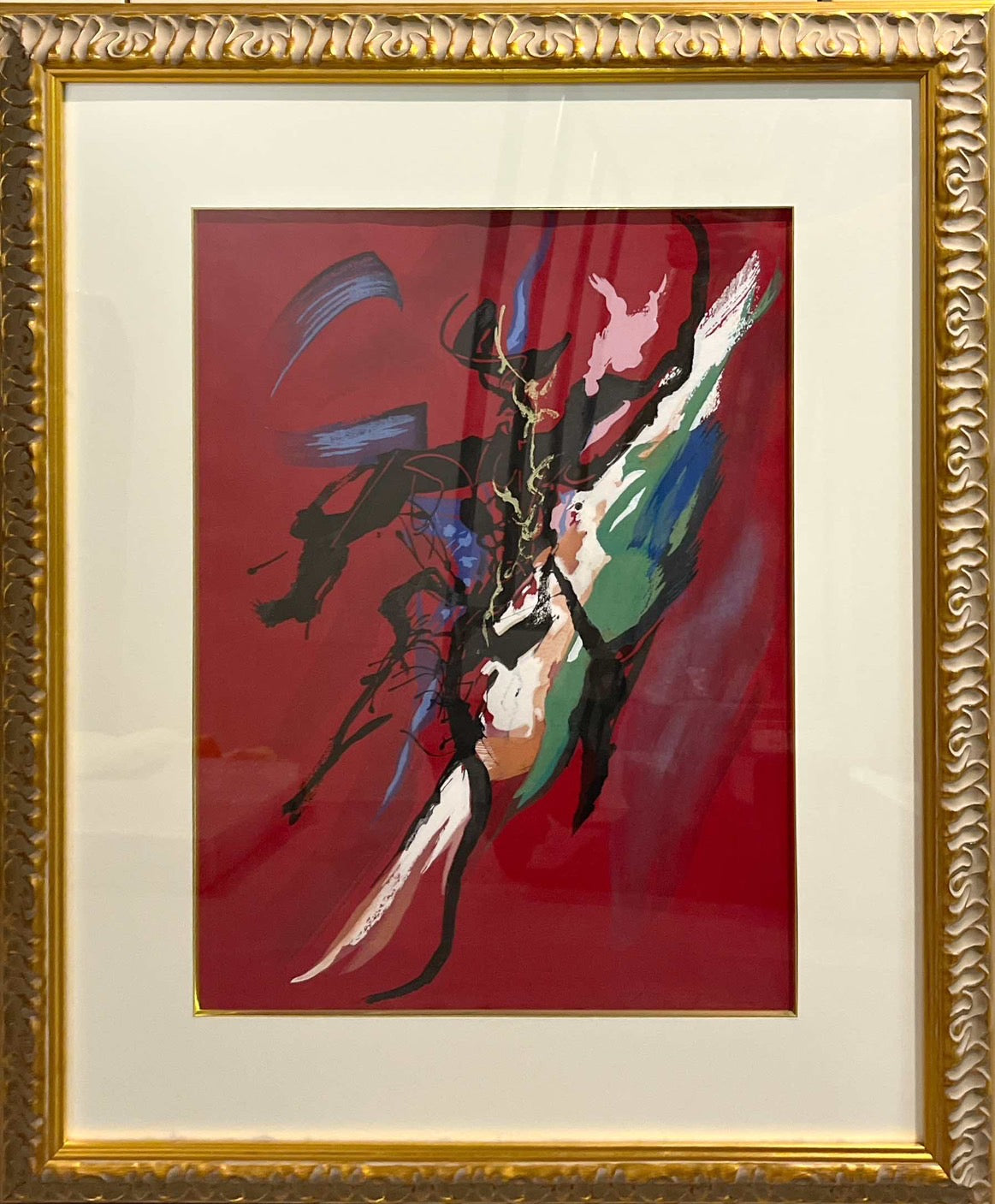
A print by Taro Okamoto titled 歓喜. Details from the artwork records and reference information from the print catalogue raisonne are presented separately below.
Artwork details
Artist
Taro Okamoto / 岡本太郎
Title
歓喜
Registered Medium
Woodcut / print
Registered Size
45.0×33.0
Frame Size
69.0×57.0
Registered Year
1962
Registered Edition
ed.100
Catalogue reference
Catalogue No.
9
Catalogue Title
歓喜
Catalogue Medium
Woodcut
Catalogue Size
45.5×34cm
Catalogue Year
1962
Catalogue Edition
ed.200 (listed as an edition of 100 in a later woodcut portfolio)
Signature
Printed TARO signature; brush signature at lower left
Notes
Block cutter: 原田亀. Printer: 伊藤智. Included in 岡本太郎木版画集, published in 1970.
About the recorded details
The artwork details are based on the records for the item offered for sale. The catalogue section provides reference information and does not necessarily describe the dimensions, edition or signature of this particular impression. Please enquire before purchasing about any discrepancies or details marked as awaiting confirmation.
About the artist
Taro Okamoto (1911-1996) was a leading Japanese avant-garde artist whose practice encompassed painting, sculpture, public art and writing. His time in Paris helped shape his distinctive approach, and his work had a lasting influence on postwar Japanese art and design.
Purchase enquiries
For details about condition, framing, the availability of a certificate, or shipping, please contact roidworksgallery using the purchase enquiry form on this page.
Understanding the technique
Woodcut prints are made by carving a wooden block, applying ink or paint to the raised surfaces, and printing them. In addition to the shapes of lines and planes, the layering of printed colors and the texture of the paper can reveal more detail.
This is a general explanation of the technique. It does not describe the specific production process or condition of this work.